
The complete guide to seeing Cape Town in a day – from Table Mountain and Bo-Kaap to Robben Island, the Diamond Museum and beyond. Discover the city’s most iconic attractions, breathtaking scenery, rich cultural heritage, and unforgettable experiences, all carefully brought together in one seamless journey.
Quick answer
A Cape Town city tour showcases the city’s top attractions in 6–8 hours, including Table Mountain (or Signal Hill), Bo-Kaap, the V&A Waterfront, the Diamond Museum, and the Company’s Garden. Full-day tours may also include Robben Island and Kirstenbosch Botanical Gardens. Tours start from $65 per person for shared groups or $107 for private tours, with hotel pickup typically included.
Cape Town was named the world’s most beautiful city by Time Out in June 2026, after 24,000 people across 150 cities were asked whether they would describe their city as beautiful. An overwhelming 86% of Capetonians said yes – the highest percentage of any city surveyed, placing Cape Town ahead of Edinburgh (84%), Sydney (78%), and Paris. Source: Time Out, June 2026.
That result reflects something every first-time visitor notices quickly: Cape Town is a city where the mountain, the ocean, the history, and the culture are not separate experiences. They are woven into the same day. A city tour from Cape Town doesn’t just show you sights – it gives you the full context of one of Africa’s most extraordinary cities.
Explore all Cape Town tours Cape Town tours,
A Cape Town city tour is a guided day out covering the Mother City’s essential cultural, historical, and scenic highlights. Unlike a Cape Peninsula tour (which heads south along the coastline) or a Winelands tour (which travels into the wine estates), a city tour stays within and immediately around Cape Town – showing visitors the urban fabric of the city that makes it unlike anywhere else in Africa.
A well-structured city tour moves through several distinct zones, each with its own character:
No visit to Cape Town is complete without Table Mountain. At 1,086 metres, it forms one of the most recognisable skylines in the world – and it looms over every part of the city as a constant reference point. The cable car (Aerial Cableway) rotates 360 degrees on the ascent, giving unobstructed views of the city, the ocean, Robben Island, and the Cape Peninsula.
The cable car operates weather-dependently – strong winds or cloud cover (the famous ‘tablecloth’) can close it for the day. Your guide will monitor conditions and suggest Signal Hill as a viewpoint alternative if needed.
Entrance for international visitors: approximately R420 per adult for the cable car (2025/26 tariff). Check current pricing at tablemountain.net.
→ Table Mountain, Kirstenbosch & Constantia Winelands Private Tour
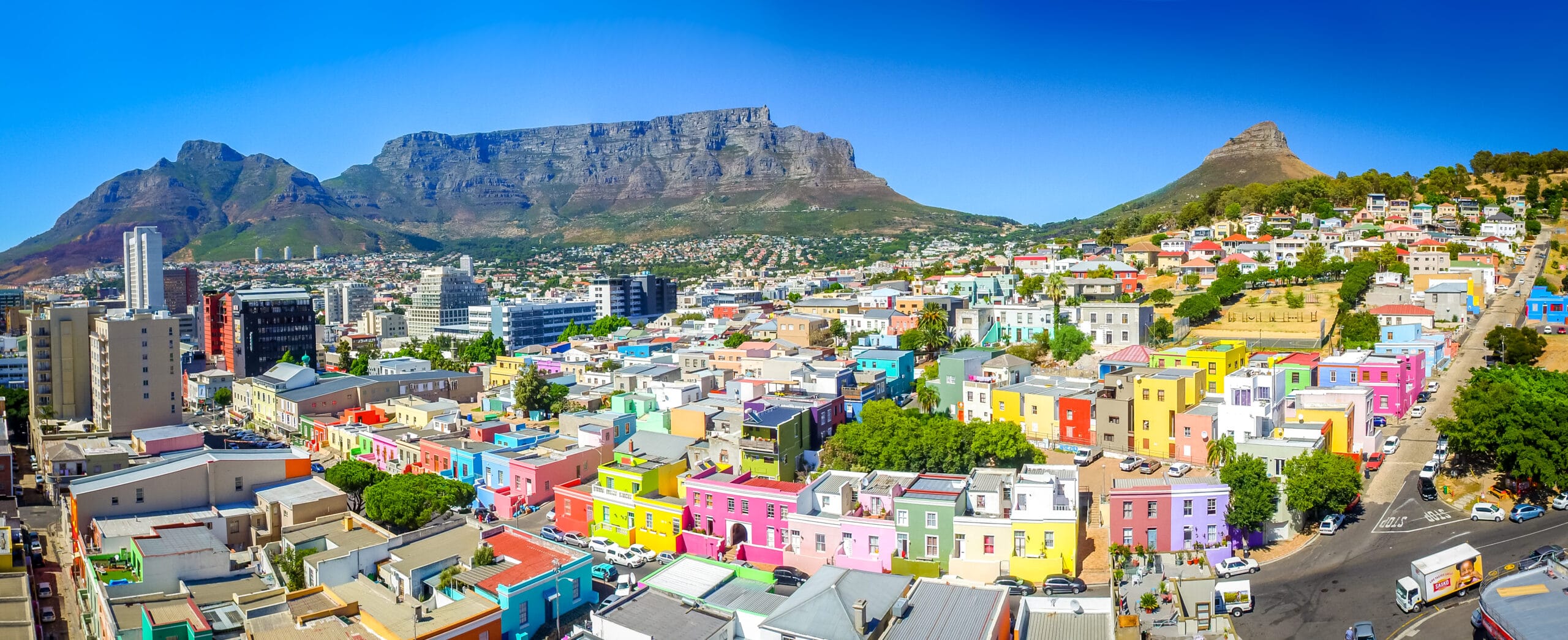
Bo-Kaap is Cape Town’s oldest surviving residential neighbourhood, clinging to the lower slopes of Signal Hill just above the city centre. Its origins stretch to the 1760s when Jan de Waal built rental houses for enslaved people brought from Malaysia, Indonesia, India, and East Africa by the Dutch East India Company.
While enslaved, residents were required to paint their homes white. After emancipation in 1834, they painted them in the brightest colours they could find – pinks, yellows, greens, turquoises – as an act of celebration and freedom. That tradition of colour became a living symbol of identity that persists today. Source: South African History Online, 2026.
According to the South African Heritage Resources Agency, Bo-Kaap contains the largest concentration of pre-1850 architecture in South Africa and remains home to the Auwal Mosque, the first mosque established in South Africa, built in 1794. It was declared a Heritage Protection Overlay Zone in 2019. Source: Wikipedia / SAHRA, 2026.
Visit Wale Street and Chiappini Street for the most photographed houses. Arrive before 09:00 for the best light and quieter streets. Note: Bo-Kaap is a living residential community, not a theme park – photograph respectfully and ask before photographing people outside their homes.
The V&A Waterfront is Cape Town’s historic working harbour, now home to restaurants, shops, galleries, the Two Oceans Aquarium, and the Nelson Mandela Gateway – the departure point for Robben Island ferries. It combines genuine working-harbour atmosphere with world-class leisure infrastructure. This is a natural start or end point for most city tours.
Cape Town’s Cape Town City Tour & Diamond Museum experience combines the city highlights with a visit to Jewel Africa, showcasing Cape Town’s historical connection to South Africa’s diamond industry. An expert guide walks visitors through the journey from rough stone to finished gem, and through South Africa’s role in global diamond production.
Established in 1652 by the Dutch East India Company as a vegetable garden to supply passing ships, the Company’s Garden is now Cape Town’s central public park and one of its oldest landmarks. Surrounding it are the South African Parliament, the Iziko South African Museum (the country’s oldest, dating to 1825), and St George’s Cathedral – where Desmond Tutu led some of the most significant anti-apartheid sermons in the 1980s.
Nearby Greenmarket Square has been a marketplace since 1696 and is now Cape Town’s best-known craft and souvenir market.
On the eastern slopes of Table Mountain, Kirstenbosch is one of the great botanical gardens of the world – 36 hectares of curated planting set against 493 hectares of natural fynbos. It is included in the Cape Floral Region Protected Areas UNESCO World Heritage Site. The summer sunset concerts (November to April) are one of Cape Town’s great local traditions.
Opening hours: 08:00–18:00 daily. Entry for international adults: approximately R250.
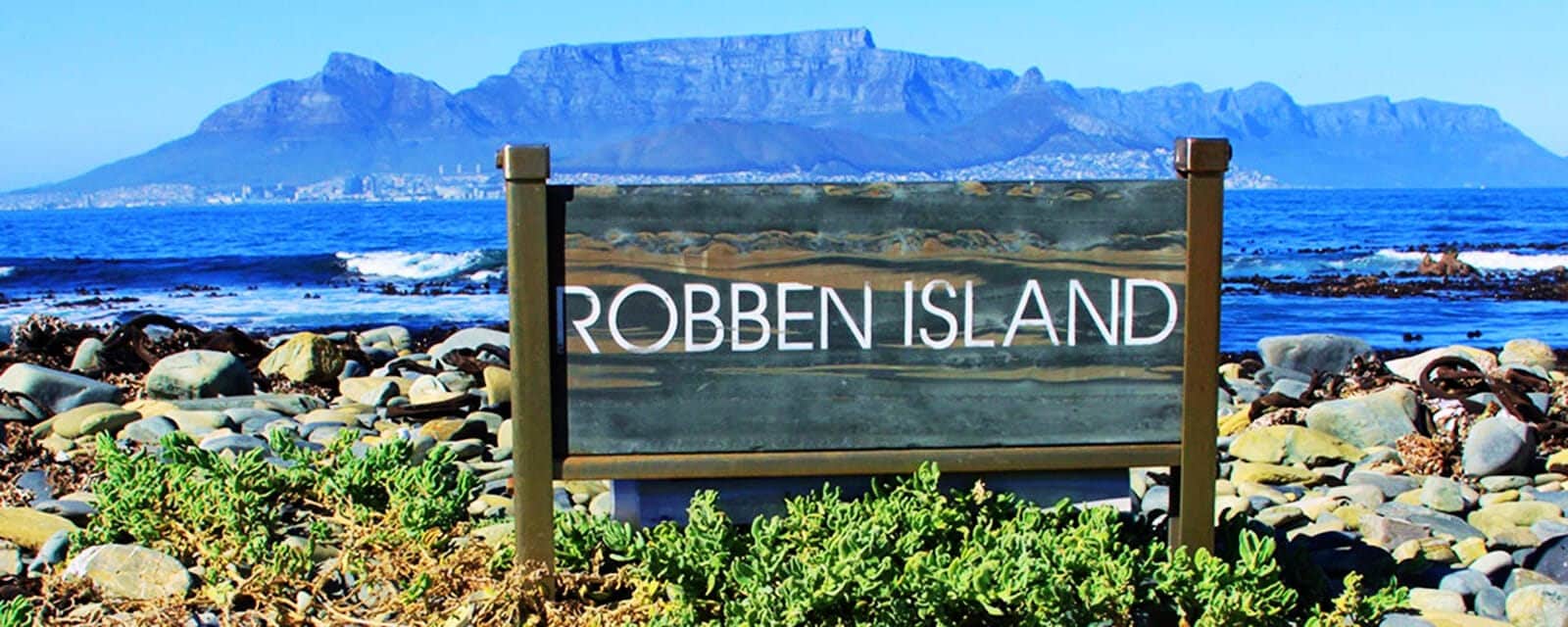
Robben Island is the single most emotionally and historically significant site in Cape Town, and arguably in all of South Africa. Located in Table Bay, 12 kilometres off the V&A Waterfront, it served for centuries as a place of banishment and imprisonment – a leper colony, a colonial prison, and ultimately the maximum-security prison where the apartheid government held Nelson Mandela for 18 of his 27 years in prison.
Quick answer
Robben Island was designated a UNESCO World Heritage Site in 1999 in recognition of its universal significance as a symbol of the triumph of human rights over oppression. The standard tour departs by ferry from the Nelson Mandela Gateway at the V&A Waterfront, takes 3.5 hours in total (30 minutes each way on the ferry), and includes a guided bus tour of the island and a walking tour of the maximum-security prison, led by a former political prisoner. Ferries depart at 09:00, 11:00, 13:00, and 15:00. Source: Robben Island Museum / UNESCO.
Mandela’s cell in B-Section measures 2.4 x 2.1 metres and is preserved exactly as it appeared during his incarceration. Prisoners were forced to perform hard labour at the lime quarry – not for any constructive purpose, but to break their resolve. The quarry became instead what Mandela and his fellow prisoners called ‘Robben Island University,’ where they secretly educated each other and strengthened their resistance. Source: visitrobbenisland.com, 2026.
Practical notes: Book Robben Island tickets as far in advance as possible, especially for December–February peak season. Ferries cancel in rough weather (most commonly June–August). The tour cannot be done independently – all visits are via the official guided programme. Tickets from approximately R825 for international visitors (2026 rates).
Combining Robben Island with a Table Mountain visit makes a deeply rewarding full day in Cape Town:
→ Private Full-Day Tour to Robben Island and Table Mountain
→ Private Robben Island Tour: Experience History Your Way (blog)
Cape Town is a year-round destination, but conditions vary significantly by season.
| Month | Weather | Crowds | What to know |
|---|---|---|---|
| Jan–Feb | Hot (26–30°C), strong south-easter wind | Very busy | Peak season — book all tours ahead. Wind can close the Table Mountain cable car. |
| Mar–Apr | Warm (22–26°C), winds ease | Moderate | Ideal: good weather, manageable crowds, soft light for photography. |
| May | Mild (18–22°C), start of rain | Quieter | Good value; some winter rain begins. |
| Jun–Aug | Cool (14–18°C), wettest months | Quiet | Best value season. Whale season opens in Hermanus (June). Robben Island ferry can cancel in Atlantic swells. |
| Sep–Oct | Spring, warming (17–22°C) | Building | Wildflower season; fynbos in bloom around Table Mountain. |
| Nov–Dec | Warm (22–28°C), winds return | Busy | Long daylight hours. Kirstenbosch summer concerts begin November. |
Best overall months: March–May and September–October offer the best combination of pleasant weather, smaller crowds, and lower prices. For a full Cape Town + Hermanus whale watching combination, plan for June–December.
→ Safari Experiences from Cape Town: Day Trip vs Overnight (blog)
Quick answer
A shared group city tour is best for solo travellers and couples who want a social experience at a lower price. A private city tour is best for families, couples celebrating an occasion, or anyone who wants to move at their own pace, skip specific stops, or add personal requests to the itinerary. Both cover the same core stops.
| Factor | Table Mountain | Cape Point |
|---|---|---|
| Location | City Bowl, central Cape Town | ~1 hour south, tip of the peninsula |
| Signature experience | Rotating cableway to a flat summit plateau | Funicular/lighthouse walk over dramatic sea cliffs |
| Typical visit length | 2-5 hours | Half-day, usually combined with Boulders Beach penguins |
| Best combined with | City tour, Bo-Kaap | Boulders Beach, Chapman’s Peak Drive |
| Tour type | Price (USD) | Duration | Notes |
|---|---|---|---|
| Shared group city tour | From $65 per person | 6–7 hrs | Core city stops; shared with other guests |
| Private city tour | From $107 per person | 6–8 hrs | Flexible itinerary; hotel pickup included |
| City tour + Diamond Museum | From $107 per person | 6–7 hrs | Includes Jewel Africa Diamond Museum |
| City tour + Table Mountain | From $150 per person | 7–8 hrs | Weather-dependent; cable car fee separate |
| Robben Island + Table Mountain | From $185 per person | Full day | UNESCO heritage + iconic summit in one day |
Entrance fees (Table Mountain cable car ~R420, Kirstenbosch ~R250, Robben Island ~R825) are typically excluded unless listed as ‘inclusive’. Confirm at booking.
A typical Cape Town city tour includes visits to the city’s most iconic attractions, such as Table Mountain, Bo-Kaap, the Victoria & Alfred Waterfront, the Company’s Garden, Greenmarket Square, and the Diamond Museum. Some full-day tours also include Robben Island and Kirstenbosch National Botanical Garden. Most tours include hotel pickup, a professional guide, and transportation, while entrance fees may be additional depending on the tour package.
Most Cape Town city tours last between 6 and 8 hours, depending on the itinerary and the attractions included. A standard city tour covers the major highlights in one day, while tours that include Robben Island generally require a full day because the ferry and island visit take approximately 3.5 hours.
Many Cape Town city tours include a visit to Table Mountain, but the cable car ticket is often charged separately unless stated otherwise. Because the cableway operates weather permitting, guides may substitute Signal Hill or another scenic viewpoint if strong winds or low cloud prevent the cable car from operating.
Cape Town can be visited throughout the year, but March to May and September to October are generally considered the best months. These seasons offer pleasant temperatures, fewer crowds, and excellent conditions for sightseeing. Summer (December to February) is the busiest period, while winter (June to August) offers lower prices and the opportunity to combine a city tour with whale watching in nearby Hermanus.
A shared Cape Town city tour is ideal for solo travellers, couples, and visitors looking for an affordable sightseeing experience. A private tour offers greater flexibility, allowing you to customise the itinerary, spend more time at attractions, and travel at your own pace. Private tours are particularly popular with families, photographers, and travellers celebrating special occasions.
Yes. A Cape Town city tour is one of the best ways for first-time visitors to experience the city’s history, culture, and natural beauty in a single day. With an experienced local guide, you’ll gain valuable insight into landmarks such as Table Mountain, Bo-Kaap, the V&A Waterfront, and Robben Island, while avoiding the stress of planning transport and navigating between attractions yourself.
Zion Escape Tours is a Cape Town-based tour operator specializing in private and group tours across Cape Town and its surrounding destinations. We create personalized travel experiences tailored to your interests, combining local expertise, exceptional service, and carefully crafted itineraries to help you explore the very best of the Mother City.
+27 61 354 6457
© 2026 Zion Escape Tours. All Rights Reserved. Website Designed By Kijo Digital